
Every day, thousands of vehicles are sold on Copart and IAAI. Some are great deals. Others are financial traps waiting to happen. The difference between a smart purchase and a costly mistake comes down to one thing: verification.
Experienced buyers never bid based on a single photo or a short damage code. They follow a three‑step verification process:
- Track the right lots
- Check the vehicle’s history
- Analyze auction photos in detail
When you combine these steps, you remove guesswork from bidding.
Step 1: Track Lots Before They Become Popular
Most bidders start searching only when they are ready to buy. That is too late. The best deals are spotted early by buyers who track auctions in real time.
With carvinfax, you can:
- set up custom alerts for specific makes, models, or damage types
- monitor active and upcoming lots without refreshing pages
- receive notifications the moment a matching vehicle appears
Tracking gives you time. Time to research. Time to compare. Time to avoid rushed decisions.
Step 2: Check Vehicle History Without Spending
Once you find a promising lot, your next move is critical. You must uncover the car’s past before you place any bid.
Auction reports only show what the seller wants you to see. A full history check reveals:
- title brand (Clean, Salvage, Rebuilt, Flood)
- previous accident records
- odometer readings over time
- theft or lien status
Skipping this step is the number one reason buyers lose money.
That is why you should check vin free before committing to any bid. When you have free access to reliable history data, you protect yourself from hidden problems like flood damage, odometer rollbacks, or salvage titles that make registration impossible.
Step 3: Analyze Auction Photos Like a Pro
Damage codes tell you what happened. Photos tell you how bad it really is.
Many buyers glance at photos and miss critical red flags. A professional inspection includes:
- Panel gaps — uneven gaps suggest structural damage
- Paint mismatch — different shades mean replacement parts
- Interior water lines — sediment on carpets or seat rails indicates flooding
- Under‑hood condition — bent frame rails or displaced components
- Airbag status — missing or deployed airbags add thousands to repairs
To do this properly, you need high‑resolution images from multiple angles. That is why you must check copart photos carefully before making any decision. Photos are your only visual evidence of the car’s real condition. Do not rush through them.
Putting It All Together: A Smart Pre‑Bid Workflow
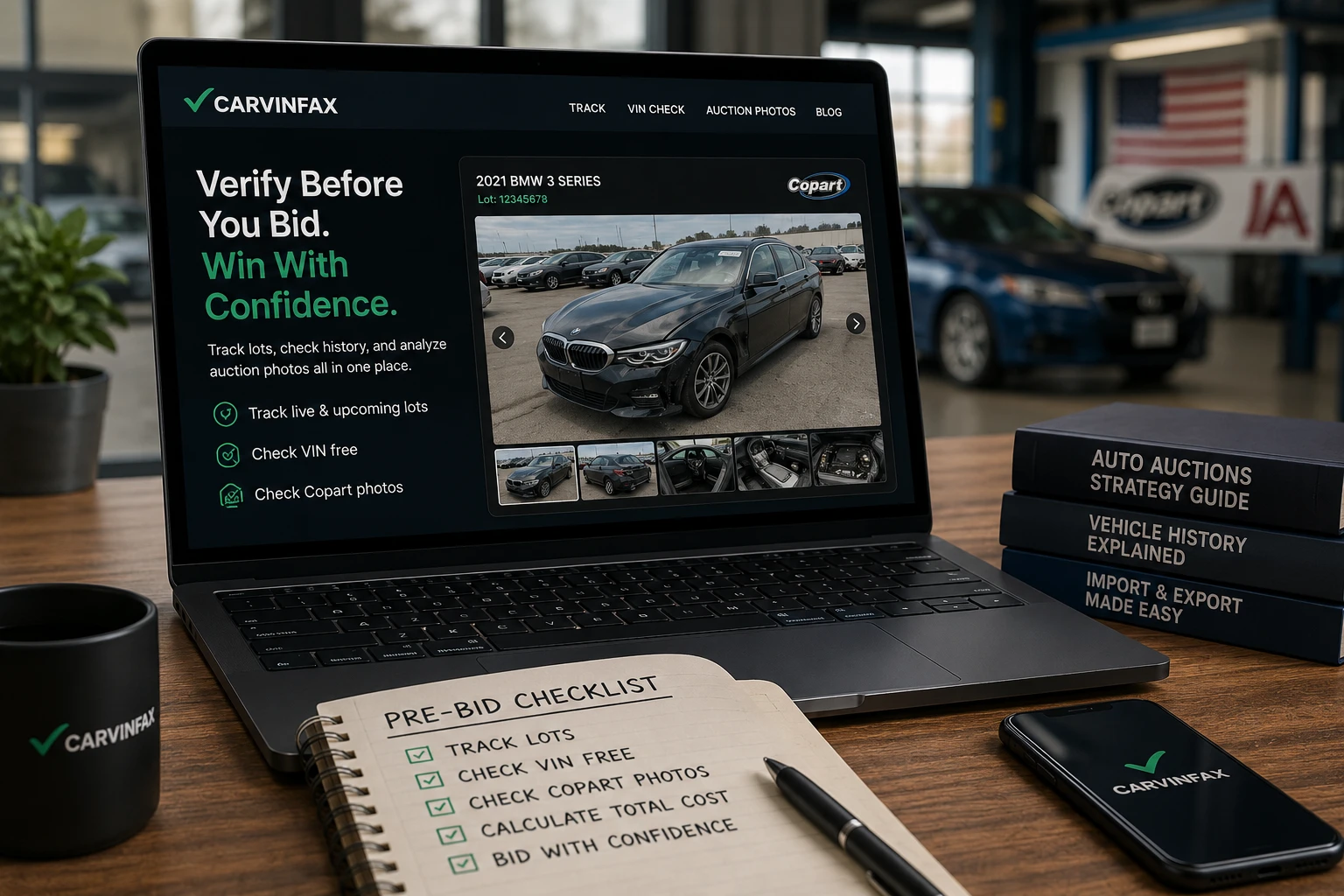
Here is how a professional buyer uses Carvinfax to verify a vehicle:
- Track — Set alerts for your target criteria. Get notified immediately.
- Check VIN free — Access the vehicle’s complete history at no cost.
- Check Copart photos — Study every image for hidden damage.
- Calculate total cost — Add fees, shipping, customs, and repairs.
- Bid only if everything checks out — Otherwise, move to the next tracked lot.
This workflow takes minutes but saves thousands.
Conclusion
The auction market rewards preparation and punishes impulsiveness. Every costly mistake — hidden salvage titles, undisclosed flood damage, structural issues — can be avoided if you verify before you bid.
Use a platform that combines all three verification tools in one place. Track lots early. Check vin free to uncover the truth. Check copart photos with a detective’s eye. When you have the complete picture, you bid with confidence and win smart.
Let Carvinfax be your verification partner. Stop guessing. Start verifying.