
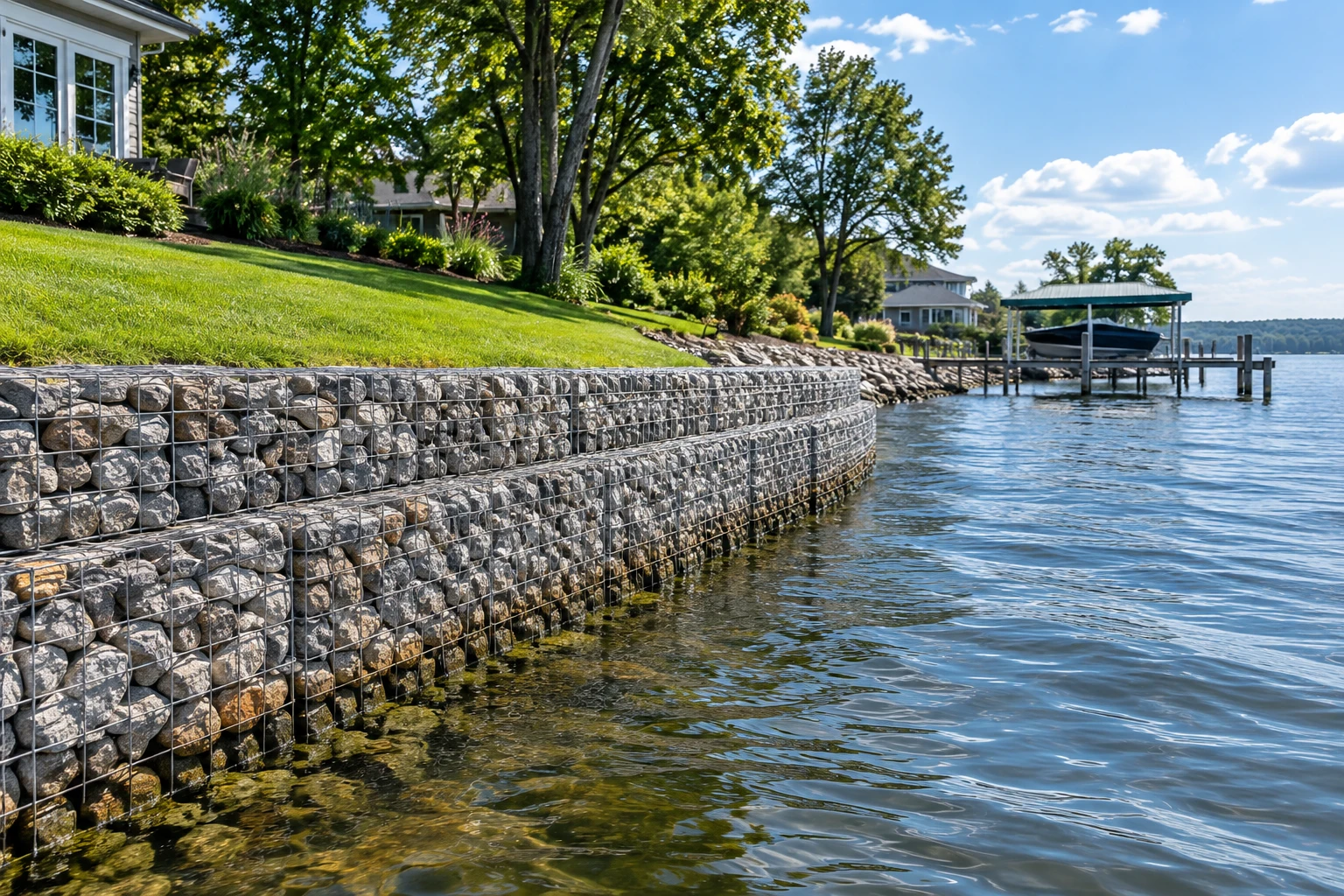
Gabion bulkheads combine stone with a containing structure that creates a different shoreline system from loose riprap or a rigid vertical wall. Shore Protect Team describes gabions as providing reliable shore protection with natural drainage and structural flexibility.
The company’s waterfront stabilization services include multiple shoreline protection methods, which makes gabions useful to evaluate when drainage and adaptability are important alongside erosion control. Their role should be compared by function rather than by stone appearance alone.
The bulkhead page lists gabions starting at $200 per linear foot for labor and materials. The FAQ emphasizes natural drainage and a flexible rock-filled structure as the defining benefits.
Natural drainage is especially important because groundwater and water movement can influence retained soil. Gabions allow water to move through the stone-filled system instead of creating the same kind of continuous vertical barrier as vinyl or concrete.
Flexibility also distinguishes gabions from rigid wall systems. The page does not give a universal rule for where gabions must be used, so the property still needs assessment for soil, water level, wave load, slope, and access.
The gabion bulkhead information should be reviewed beside riprap, wood, vinyl, and concrete by considering the required shoreline form, drainage behavior, exposure, maintenance, and site geometry.
Gabions manage water differently
The rock fill and open structure allow natural drainage through the system. This characteristic can be useful where the shoreline design benefits from water movement instead of a closed wall face.
That does not eliminate the need to understand groundwater and soil conditions. The site assessment still has to determine whether the gabion system is appropriate for the retained slope and water body.
Flexibility is a structural characteristic, not a visual style
The service page specifically describes gabions as flexible. This means the system should be evaluated as a rock-filled structural unit rather than as decorative stone edging.
Owners should ask how the gabion layout will follow the shoreline and how the structure fits the property slope and erosion conditions.
- Natural drainage – A defining characteristic of the rock-filled gabion system.
- Structural flexibility – Identified by the service page as a key advantage.
- Shore protection – The system is intended to stabilize the shoreline and reduce erosion.
- Starting price – From $200 per linear foot for labor and materials.
- Site assessment – Soil, water level, wave load, slope, and access still influence the project.
Gabions and riprap should not be treated as the same system
Both use stone, but riprap consists of natural stone and large boulders placed to absorb wave energy, while gabions contain rock fill within a flexible structure. The resulting shoreline form and drainage behavior are different.
This distinction matters when comparing estimates. A per-foot price for gabions is not directly equivalent to a per-foot price for loose rock if the systems are solving the shoreline problem in different ways.
- Identify whether natural drainage is a priority for the site.
- Review the slope and shoreline geometry that the system must stabilize.
- Assess wave load and erosion conditions.
- Compare gabions with riprap and vertical walls by function, not appearance alone.
- Measure access for rock and gabion placement.
- Include the complete system in the estimate rather than only the stone quantity.
When gabions become a practical choice
Gabions make the most sense when the property can use a flexible, rock-filled shoreline structure and natural drainage is beneficial. They may also fit landscapes where a rigid vertical wall is not the preferred form.
A clear proposal should explain the site conditions that support the gabion choice, the length of shoreline included, and how the system will be placed. That makes the decision more defensible than selecting gabions only because they look natural.
Gabion planning includes the basket system, not only the stone
A gabion estimate should describe more than the quantity of rock. The stone is contained within a structural basket system, and the page’s emphasis on flexibility and drainage applies to that complete assembly. Treating gabions as loose rock can obscure the construction scope.
Access can also affect installation because both basket components and stone have to reach the shoreline. A property with limited working space may require a different staging plan from an open site, even if the finished gabion wall is the same length.
Owners should therefore compare gabion proposals by the complete structure, shoreline geometry, and placement method. A lower stone price does not establish the final project cost if the basket system, access, or site preparation is different.
Gabions can follow shoreline geometry in a different way
The page’s project examples show gabion systems used along pond edges and multi-level slopes. That flexibility can be useful where a rigid straight wall is not the preferred form. The final layout should still be developed from the actual property geometry rather than forcing a decorative basket pattern onto the shoreline.
Drainage benefit does not remove erosion assessment
Natural drainage is one reason to consider gabions, but the system must still protect the shoreline from the water conditions present at the site. Wave load, erosion intensity, slope, and soil all remain part of the decision. Drainage is an advantage within a suitable design, not a substitute for site assessment.
Gabion projects can also differ in height and arrangement along the same property. If the system steps with a slope or changes level, the estimate should identify those sections clearly so that basket quantity, stone fill, and access are based on the actual geometry rather than a single average figure.