
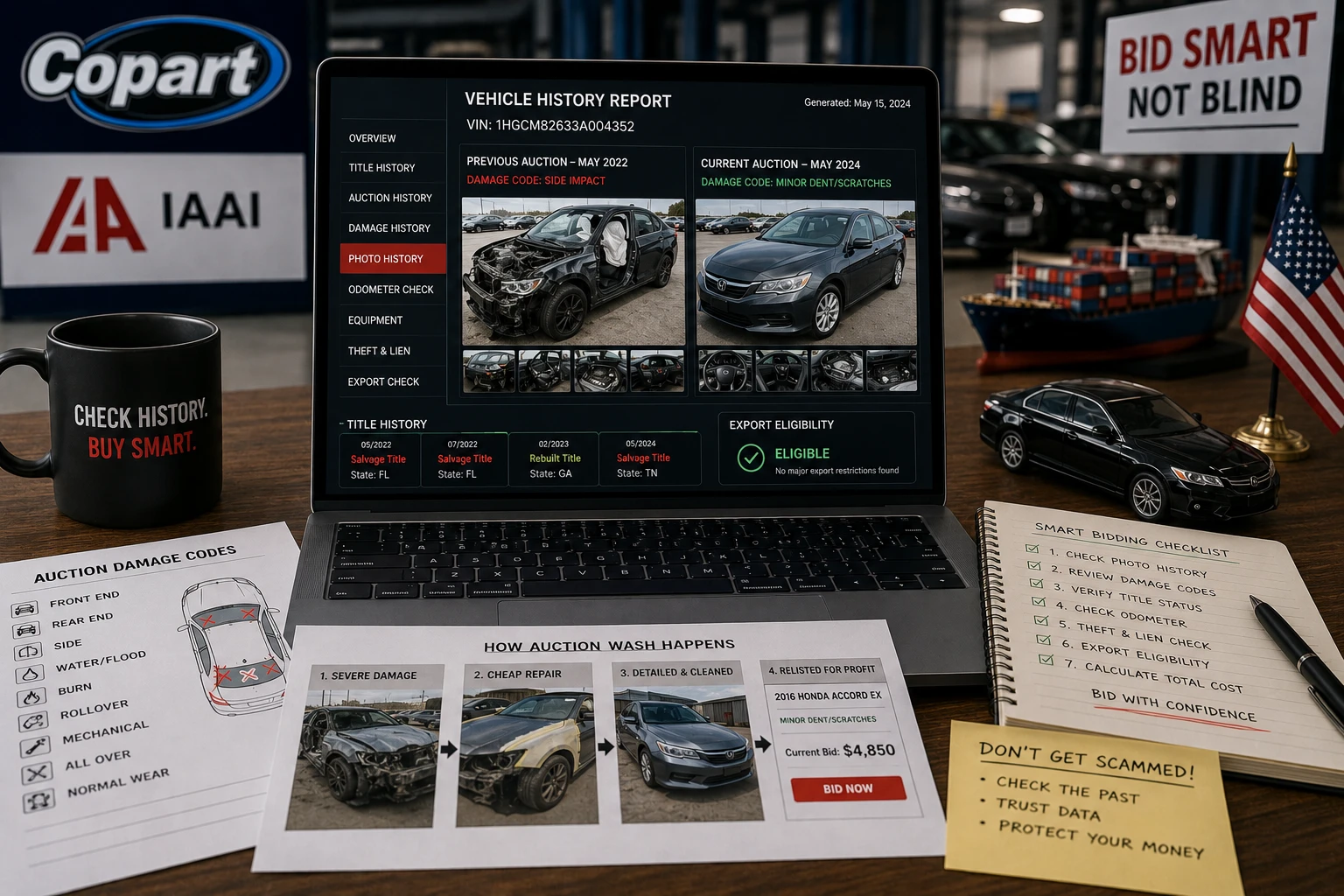
Bidding on salvage vehicles offers incredible profit margins for dealers and massive savings for private buyers. However, this lucrative secondary market has a well-known dark side: „auction washing.” Unscrupulous sellers frequently purchase severely wrecked automobiles, perform cheap cosmetic repairs using zip ties and filler, and relist them to trick unsuspecting bidders. These heavily disguised vehicles look fantastic in digital listing thumbnails but harbor dangerous, potentially fatal structural flaws underneath the fresh paint.
To protect your capital from these sophisticated scams, relying solely on current auction lot descriptions is a guaranteed path to failure. The ultimate defense mechanism for any buyer is a deep dive into the past via the Vehicle Identification Number. By utilizing a comprehensive platform to check vehicle photo history, you can uncover archived images from previous auction appearances. Comparing the current pristine photos with the original post-accident state instantly exposes flipped cars. You will quickly reveal bent frames, cut pillars, deployed airbags, and missing engine components that the seller desperately tried to conceal from international buyers.
Decoding the Truth Behind Damage Codes
Fraudulent rebuilders frequently manipulate the visual presentation of a lot, but historical data trails rarely lie. A vehicle might currently be listed at the yard with a reassuring „Minor Dent/Scratches” or „Normal Wear” designation. However, historical auction data might reveal that its original listing featured entirely different, severe designations. It is absolutely crucial for buyers to deeply understand auction damage codes in their historical context. If a car was previously marked as „Water/Flood” or „Burn”, no amount of professional detailing will reverse the corroded electrical harnesses, ruined modules, or toxic mold hidden deep within the cabin upholstery.
Title Verification: The Export Lifeline
Beyond the physical condition, the vehicle’s legal documentation can also expose an auction wash operation. Scammers sometimes exploit administrative loopholes across different state jurisdictions to alter the Title Status. An automobile originally branded with a „Certificate of Destruction”, „Parts Only”, or „Junk” title might be improperly rebranded to mimic a standard „Salvage Title” that appears eligible for export. Verifying the historical title timeline through the VIN ensures you are not buying a legally dead vehicle. Ignoring this step often results in the car facing absolute rejection by US Customs during the export clearance phase, leaving the buyer stranded.
The Logistical Nightmare of a Bad Buy
The severe consequences of purchasing a disguised wreck extend far beyond the initial winning bid at Copart or IAAI. The entire complex consumer journey, from the American auction yard to the overseas destination, becomes hopelessly jeopardized. International delivery is an expensive logistical puzzle involving specialized inland towing, port warehousing, and maritime ocean freight. Paying thousands of dollars to ship a vehicle that turns out to be structurally compromised and impossible to register is a catastrophic financial loss. Furthermore, pre-existing structural weaknesses often lead to additional damage while the car is being hoisted or secured inside a shipping container.
Conclusion
Navigating the highly competitive US auto auction landscape requires a cynical eye, extensive patience, and powerful analytical tools. Never let a shiny exterior or a freshly vacuumed interior blind you to underlying mechanical and legal realities. By cross-referencing past damage assessments, tracking title changes, and meticulously comparing historical auction photography, you completely eliminate the dangerous guesswork. Always secure a safe US auto import by evaluating the complete vehicle lifecycle before placing a single bid. This diligent approach guarantees that the machine arriving at your driveway perfectly matches your financial calculations and technical expectations.